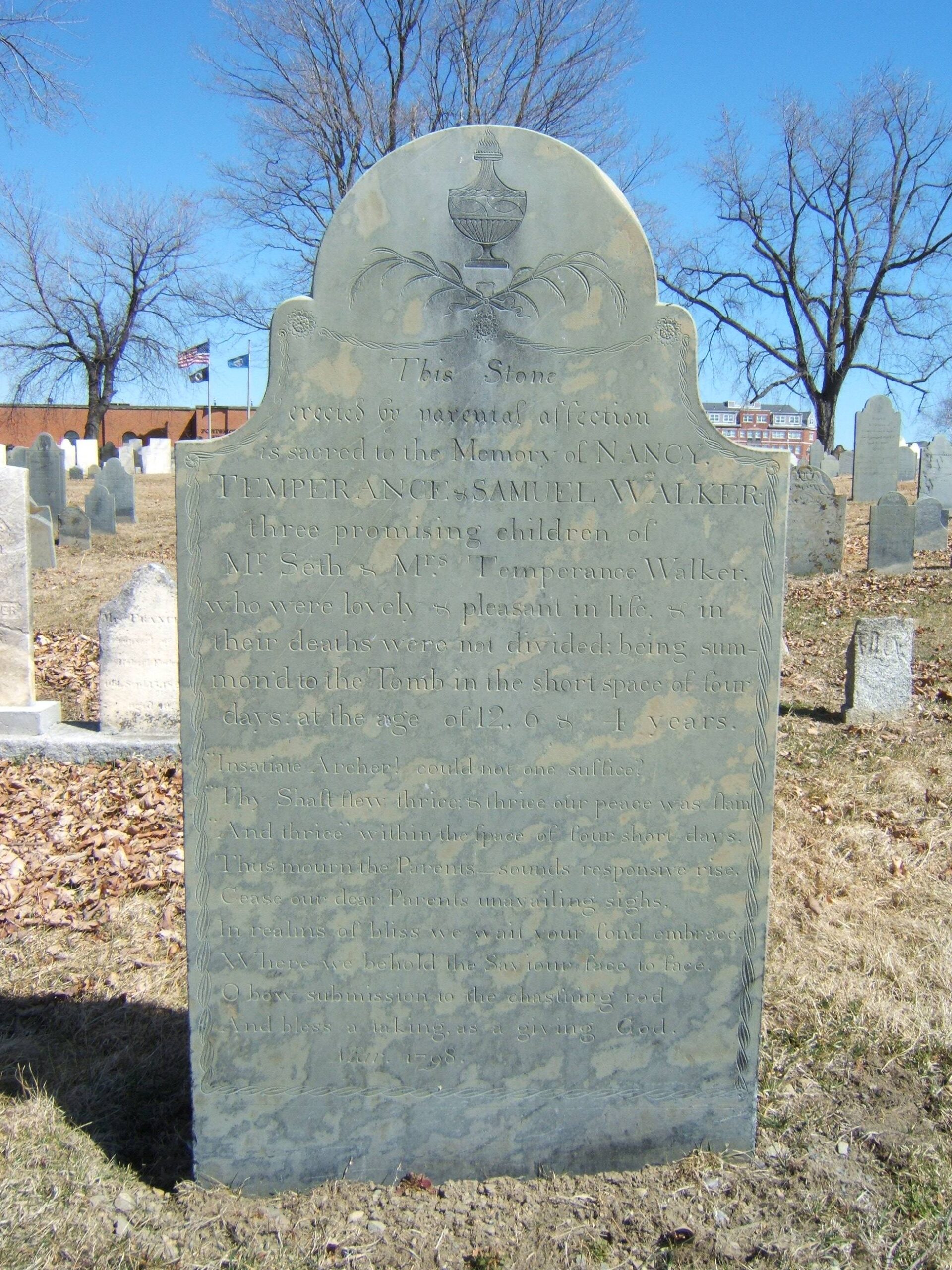
It’s a sad story full of heartbreak. We can well imagine–perhaps we know of someone whose family was lost in a tragedy. (Research hints that perhaps it was from dysentery that their lives were lost.)
But even in death, there is a whisper of hope. Do you see it? In the first four lines of the poem, the parents grieve in sorrow. In the last five lines, the voice of the children speak comfort to their parents.
“In realms of bliss we wait your fond embrace
where we behold the Savior face to face…”
Christians alone have this confidence–because of Easter.
The Christian graveyards here in Izmir have similar stories from that time period. Before the advent of things like penicillin and standardized sanitation methods, sickness and child death would abound.
Facing tombstones every Sunday in the church yard reminded people of ages past of the fleetingness of life. How we must always be prepared. The Memento Mori (“remember death”) tombstones with skulls and crossbones were a weekly call to consider your ways.
When we share with our friends why Easter is important and why the gospel (meaning “good news”) is the story of our faith–we bring hope in a world prone to decay. Hope, as in the ‘words’ of Nancy, Temperance, and Samuel. “We wait in bliss.”
We know that since Christ rose from the dead, we have hope imperishable. Life eternal waiting for us, because of his death (forgiveness) and his resurrection (promise of our own resurrection).
As you celebrate this holiday this year, may it be a special time of reflection.